
Robert W. Endlich
INTRODUCTION
Abiotic Oil? Deposits of oil WITHOUT the changes in decayed biologic materials such as plants, algae and plankton, buried in sedimentary basins, and then compressed, heated, and transformed into hydrocarbon deposits to be used by man, eons later. Is that possible? We explore this topic. But it is not without controversy!
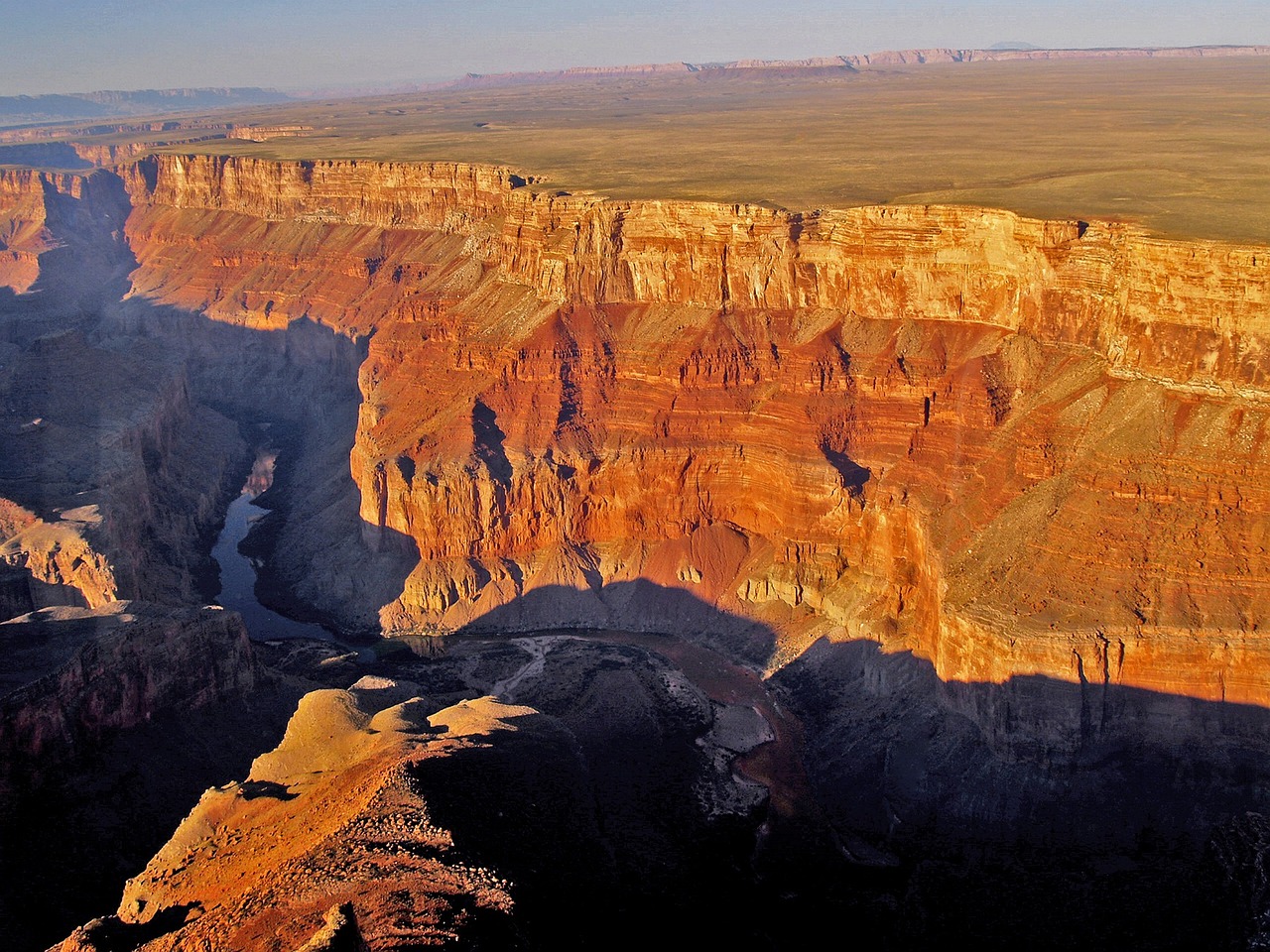
In recent decades, published results indicate that abiotic, sometimes called “abiogenic,” oil might be the origin for some of the hydrocarbon deposits of fuels. What follows is an introduction to this very possibility, and as we will soon see, probability, based on observations made on the various continents and published by Nature, The American Geophysical Union, Harvard, and Researchgate.net.
My undergraduate work was as a Geology Major at Rutgers, graduating in 1962; in those years draft into military service was obligatory for young men, and the Air Force soon sent me to Texas A&M for a year to qualify as a Weather Officer, and so I went on to a career in another Earth Science, Meteorology. But I still have a fondness for geological topics.
The earliest mention of an abiotic source for hydrocarbon fuels I found in my research for this post was a small 17 Nov 1991 News Note by Peter Aldhous in Nature, “Black Gold Causes Stir.” This Note described evidence of crude oil in the granite “basement” rocks in the Siljan region of Sweden, three hundred km northwest Stockholm, in the Baltic Shield area. We will get to the topics of “continental shields” later.
Perhaps a decade or two ago I stumbled upon an article that indicated that drillers, perhaps Russians, had discovered oil at great depth, 20,000 to 30,000 feet deep, in Eurasia, but I lost the string to that article. Searching years later, perhaps it was this 2010 AGU journal article, “Deep-seated abiogenic origin of petroleum: From geological assessment to physical theory” by Kutcherov and Krayushkin. This Abstract excerpt is germane:
“The theory of the abyssal abiogenic origin of petroleum recognizes that natural gas and petroleum are primordial materials of deep origin which have migrated into the Earth’s crust. Experimental results and geological investigations presented in this article convincingly confirm the main postulates of the theory and allow us to reexamine the structure, size, and locality distributions of the world’s hydrocarbon reserves.”
I found a good summary of this hypothesis in this 2024 reference from Youvan, The_Abiogenic_Theory_of_Hydrocarbons_Revisiting_the_Deep_Origins_of_Earth’s_Energy_Resources where he says, (lightly edited):
”The origin of hydrocarbons has traditionally been attributed to the decomposition of ancient organic matter, a cornerstone of the biogenic theory. However, the abiogenic theory proposes an alternative perspective: hydrocarbons can form deep within the Earth’s mantle through inorganic processes, challenging conventional beliefs. Evidence for this theory includes lab experiments simulating mantle conditions, hydrocarbons found in igneous and metamorphic rocks, <hydrocarbon> emissions in tectonic zones, and hydrocarbons detected on Titan and Mars.”
These findings suggest that abiogenic processes contribute to Earth’s hydrocarbon reservoirs, potentially complementing biogenic sources. Tectonically active regions, deep faults, and mid-ocean ridges emerge as critical zones for hydrocarbon migration from the Earth’s Mantle depths. While the majority of today’s commercially exploited hydrocarbons are biogenic, understanding the abiogenic contribution could revolutionize energy exploration and reshape how we view the sustainability of these resources…
AMONG THE NAYSAYERS
But, on 7 Jun 2024, Richard Somerville from the University of California San Diego Institute of Oceanography wrote
“Dead things transform into fossil fuels in Earth’s crust over millions of years; no evidence of deeper origins or renewable source.”
This is the same climate alarmist Richard Somerville who Marita Noon mentioned on our web site back in 2014 after he published his piece, “Cold Comfort.”
THE BASIS FOR THIS NEW AREA OF STUDY
On 12 March 2010 the American Geophysical Union published, “Deep-seated Abiogenic Origin of Petroleum: From Geological Assessment to Physical Theory,” by Kutcherov and Krayushhin. Here is their Abstract:
“The theory of the abyssal abiogenic origin of petroleum is a significant part of the modern scientific theories dealing with the formation of hydrocarbons. These theories include the identification of natural hydrocarbon systems, the physical processes leading to their terrestrial concentration, and the dynamic processes controlling the migration of that material into geological reservoirs of petroleum. The theory of the abyssal abiogenic origin of petroleum recognizes that natural gas and petroleum are primordial materials of deep origin which have migrated into the Earth’s crust. Experimental results and geological investigations presented in this article convincingly confirm the main postulates of the theory and allow us to reexamine the structure, size, and locality distributions of the world’s hydrocarbon reserves.”
Further below we will explore parts of this article in more detail.
LAYERS OF THE EARTH
In a previous paragraph, I mentioned “hydrocarbon migration from Earth’s Mantle depths.” So, first, we need to know the different layers of the earth, including the Mantle, at least diagrammatically. Below is an introduction:
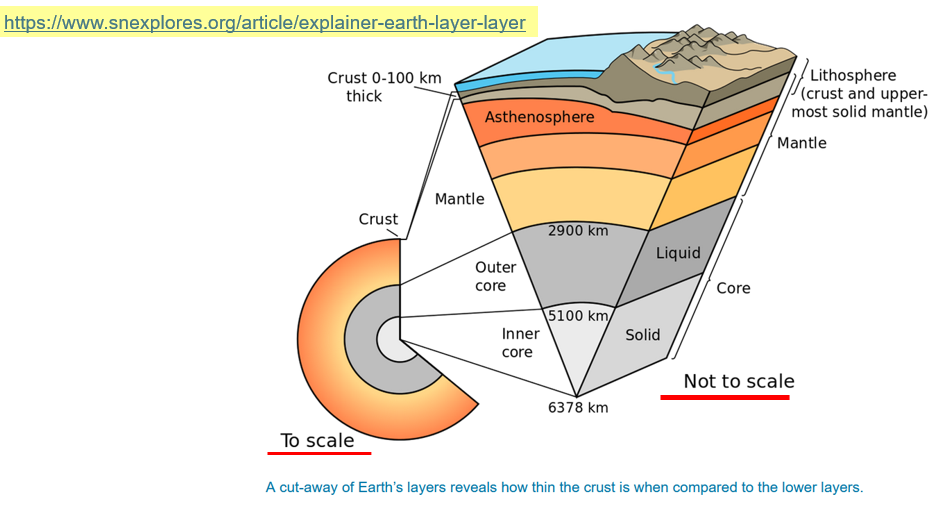
Figure 1 shows uppermost layer of the earth is the lithosphere, the solid crust which in essence “floats” upon an upper part of the Mantle, which we now know is the Asthenosphere, thought to lie from 100 to 700 km beneath the surface. The theory of Plate Tectonics was unknown during my undergraduate studies, but we now understand that the continents float upon this buttery Asthenosphere and their movement, sometimes into plate collisions, is driven by convection currents within the Mantle. One useful explanation I heard some years ago is to think of a pot of beef stew brewing on a stove: the plates resemble the blobs floating on the surface of the stew, but on Earth, continental movement speeds are akin to the rate of human hair growth.
Figure 2 below shows the effects of the convection currents over Geological Time, when plates collide, and the result is in the form of ranges of mountains, different types of volcanoes, and areas where the Mantle rock may come close to the surface. Figure 2 is a pretty fair representation of the western part of North America. What especially fits well is the right side of Figure 2, the Continental Rift Zone, which fits well into our local area in New Mexico and far West Texas, where the Rio Grande Rift plays such an important part of our local geology and geography. The proximity of the Asthenosphere to the surface at this location might prove to be an important clue in the “Deep-seated Abiogenic Origin of Petroleum,” and the formation of nearby Kilbourne Hole.
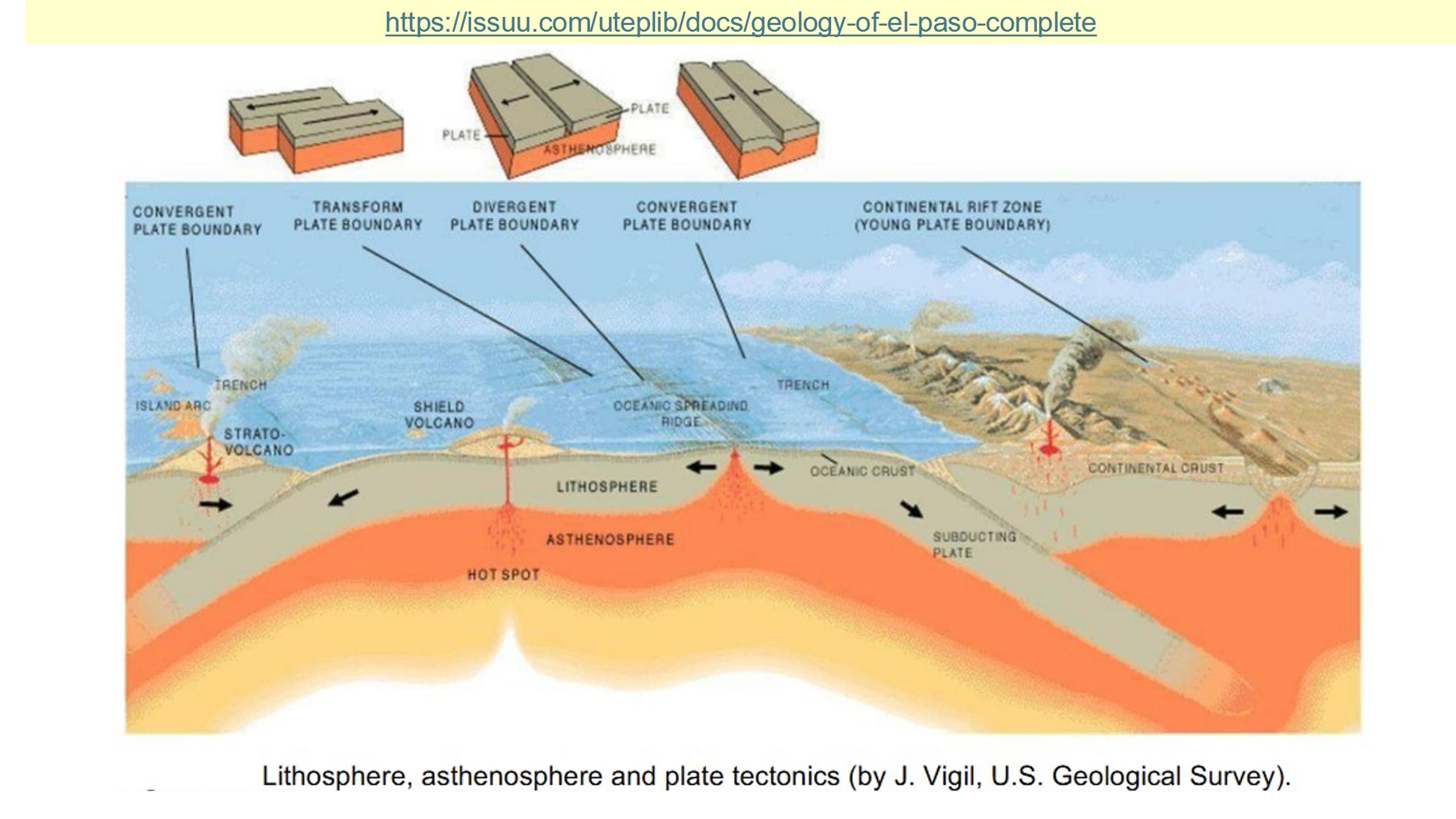
Figure 2’s diagram is important in that it shows the convection of mantle rock and the association of mantle hot spots with volcanic structures which bring the usually deep mantle rock well up into the crust as described by Kutcherov and Krayushkin in that groundbreaking 2010 AGU article.
Further, at Kilbourne Hole, a maar volcano in the Rio Grande Rift, formed when subsurface (phreatic) water explosively flashed to steam in a tremendous and nearly instantaneous release of energy. There is evidence that olivine gabbro rock was ejected during the eruption. There is strong evidence that movement of the material for this ejecta bomb came swiftly, up from the mantle:
“These <volcanic bombs> likely took fewer than three days to reach the surface from their place of origin and show pristine composition and texture. Their characteristics show that they were little altered from their formation 1.6 to 1.8 billion years ago, other than some reheating during the opening of the Rio Grande rift.”
ABIOGENIC ORIGIN OF PETROLEUM
From this reference, Para 3:
“Rising from subcrust zones through the deep faults and their feather joints or fissures, the petroliferous fluid of the mantle is injected under high pressure into any rock and distributed there. The hydrocarbon composition of oil and gas accumulations formed this way depends on the cooling rate of the fluids during their injection into the rocks of the Earth’s crust.”
And,
“when and where the further supply of injected hydrocarbons from the mantle stops, the fluids do not move further into any forms of the Earth’s crust (anticline, <up-arched> syncline <downward-bent>, and horizontal and tilted beds) without the restarting the injection of the abyssal petroliferous fluids.”
RECENT SEAFLOOR SPREADING CENTERS
Note the seafloor spreading center, near the center of Figure 2 above.
From the same reference, Para 4:
“Sub bottom convectional hydrothermal systems discharge hot (170°C – 430°C) water through the sea bottom’s black and white ‘smokers.’ Up to now, more than 100 hydrothermal systems of this kind have been identified and studied in scientific expeditions using submarines in the Atlantic, Pacific, and Indian oceans. Their observations pertaining to the deep abiogenic origin of petroleum are as follows: The bottom smokers of deepwater rift valleys vent hot water, methane, some other gases, and petroleum fluids. Active “plumes” with heights of 800–1000 m venting methane have been discovered along the Mid-Atlantic Ridge over a distance of 1200 km. At one site, there were no bottom sediments, sedimentary rocks, buried organic matter, or any <petroleum> source rocks. The hydrothermal fluid is too hot (290°C–321°C) for any microbes.”
ABIOTIC OIL DISCOVERIES
In order to understand the abiotic oil discoveries described in that important 2010 AGU article, by Kutcherov and Krayushkin, it seems important to include brief remarks here, introducing some basic geologic concepts, so readers understand the distinctively different nature of the abiotic petroleum deposits from the biotic or biogenic deposits usually associated with petroleum geology.
THE ANCIENT CONTINENTAL SHIELDS
Each of the continents has at least one continental shield, a large, stable area of low relief which is composed of pre-Cambrian crystalline (granite, granite-gneiss and similar) rocks. In all cases the age of these shield rocks is greater than 540 million years, and radiometric age dating has revealed that some of these rocks are as old as 2 to 3 billion years.
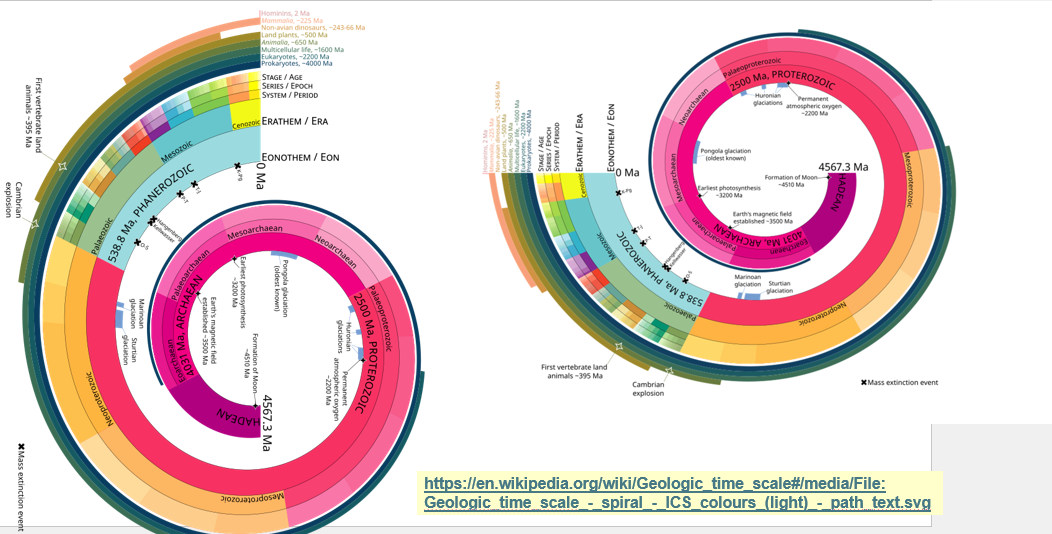
Why study continental shields when considering the notion of abiotic oil? Because, in general, the evolution of most life forms as we know them today had their earliest beginnings in the latest pre-Cambrian. (The Cambrian, and the Cambrian explosion of invertebrate life on the seafloors of Earth occurred beginning about 539 million years ago). So, when discoveries of petroleum occur underneath the continental shields, that source very likely did NOT come from the life forms which developed AFTER the base of the Cambrian.
Figure 3 below contains two spiral examples of the scale of Geologic Time.
So, where are these continental shields located? Figure 4 below maps directly the geographic location of these shield areas. The orange areas of Figure 4 show the locations where exposed shield areas of the continents are located, while the green areas map out areas where the shield areas are covered with mostly flat-lying sediments.
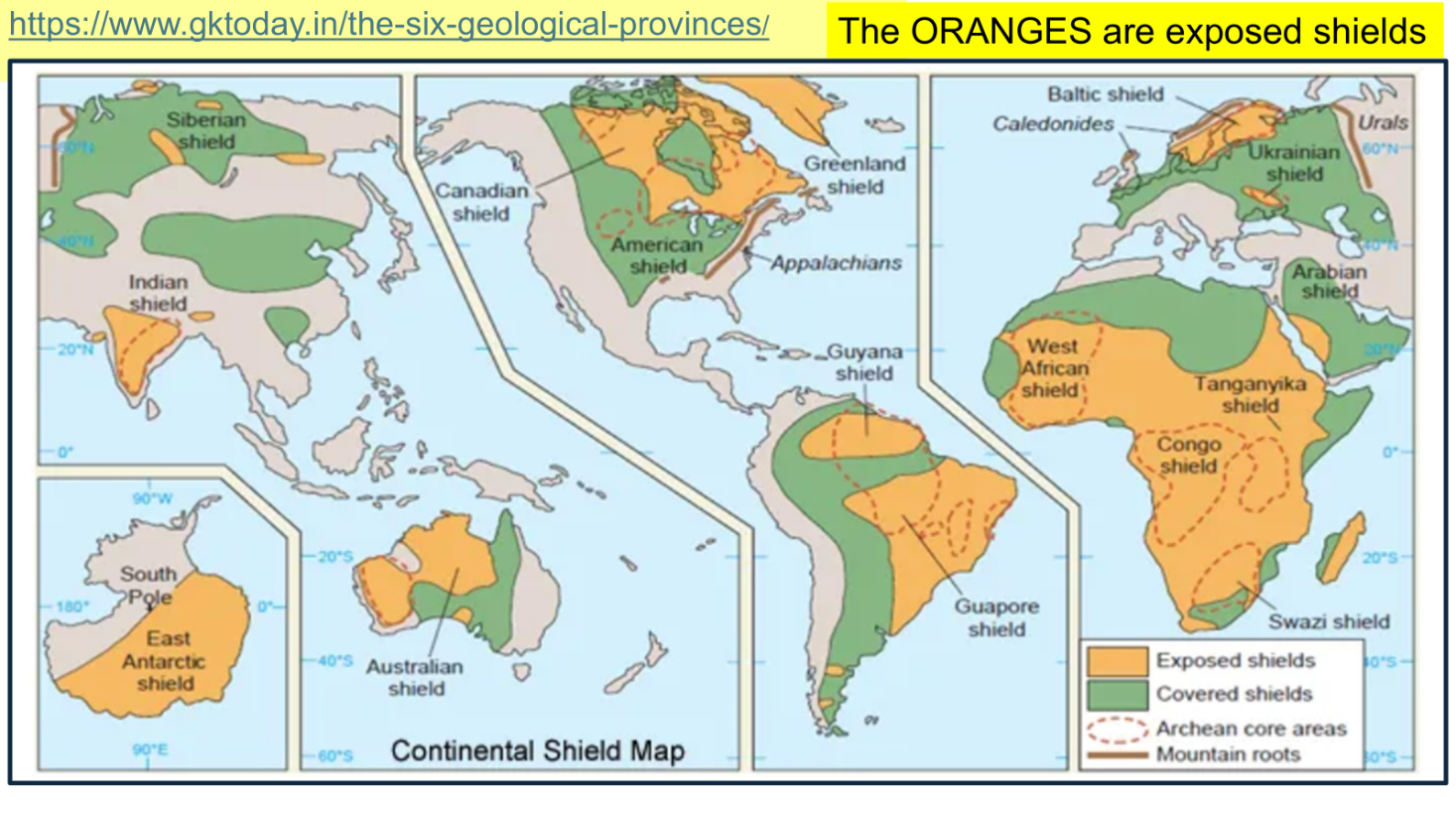
The combined areas of the exposed shields and covered shields within a single continental area are now called Cratons, a term not in use during my undergraduate years as a geology student.
We will soon see splendid examples of petroleum occurrences, even petroleum deposits, in and below the crystalline shield rocks from continents around the world. These examples show that some petroleum comes from sources clearly NOT sedimentary in nature, and NOT biogenic in origin.
NORTH AMERICAN SHIELDS
We start in North America, where a good deal of the eastern half of Canada, most of Minnesota, and parts of Wisconsin, Michigan and New York lie within the Canadian Shield province. This is mapped as the large pink area of Figure 5 below. When we say that the shield areas are composed mostly of crystalline rock, we refer to the granite and granite-gneiss rocks which are displayed in the two photos on the left side of Figure 5.
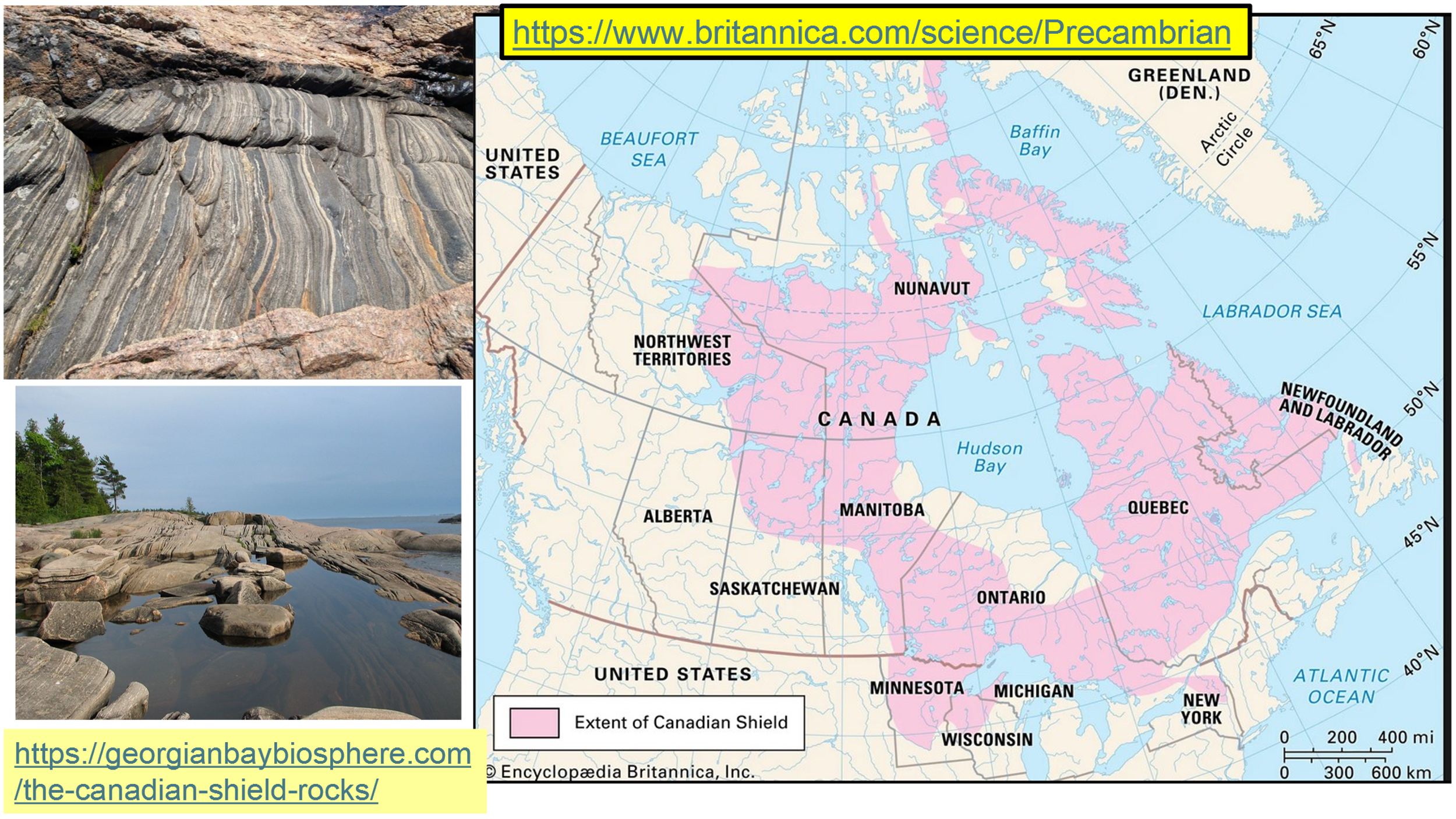
The White Pine mining district is situated on the Michigan shore of Lake Superior; there has been a boom and bust series of cycles when the mining was profitable, and closures when economic conditions waned. Some early miners discovered large “boulders” of native copper, copper in its pure form.
Here, native copper and copper ores are found in Precambrian crystalline rocks, and the copper ores are impregnated with liquid crude oil. This crude oil seeps from fractures, fissures, and caverns in the face, top, and walls of the copper mine and consists of the full and typical petroleum spectrum hydrocarbons including the optically active alkanes, porphyrins, phytane, and pristane.
Here is more information on this area. It is located in the Upper Peninsula of Michigan, and named the White Pine Sediment-Hosted Copper Deposit. In the Chalcocite deposits, the pre-mineralization phases of the copper deposit include calcite concretions and nodules, illite and hematite grain coatings, isopachous chlorite rims, emplacement of liquid petroleum (now pyrobitumen), and bleaching.
In this deposit, copper and silver ores occur in a 30m-wide zone spanning the Copper Harbor Formation red beds and the overlying Nonesuch Formation Shales. The liquid petroleum, which changed over time to pyrobitumen, is dated 1067 ± 11 ma or about 529 +/-11 ma older than the base of the Cambrian. This occurred clearly well before evolution of most life forms discovered at the base of the Cambrian, which happened about 540 million years ago. These studies have shown that during the solidification and mineralization process (roughly 1.1 billion years ago), liquid petroleum and H2S gas migrated into the area, were subsequently replaced by metal-rich, copper-bearing solutions, and deposited as the copper-rich mineral Chalcocite, Cu2S. Petroleum is found today in this deposit as inclusions of liquid oil and solid pyrobitumen in fractures and mineral veins (such as calcite and quartz). The hydrocarbon liquids were instrumental in the chemical precipitation of the copper sulfides (primarily the Chalcocite).
In the southwestern United States, but way distant from the Canadian Shield, we find volatiles in amphiboles from the mantle xenoliths, in Vulcan’s Throne, Grand Canyon, Arizona, which contain CH4, C2H4, C3H8, and heavier hydrocarbons. Here the Methane concentrations vary from 200 to 500 g/t. These hydrocarbons have δ13C equal to −26.0‰ ± 0.5‰, typical for the noncarbonate carbon in ultramafic igneous rocks <igneous or metamorphic rocks composed of dark, iron and magnesium-rich minerals (primarily olivine and pyroxene) with very low silica> where δ13C varies from −22.2‰ to −27.1‰. According to experiments, amphibole-bearing xenoliths crystallize at the depth of 65 km. One definition of Amphibole states, “Amphiboles, from the Greek amphibolos, meaning ambiguous, was named by the famous French crystallographer and mineralogist René-Just Haüy in allusion to the great variety of composition and appearance shown by this mineral group.”
OUT OF AFRICA
We now shift our attention to Africa, specifically to Lake Albert, between Zaire and Uganda. Figure 6 below is also adapted from that important work by Kutcherov and Krayushkin published by AGU, which shows, on the west side of Lake Albert, commercial petroleum-producing areas of Kingfisher, Mputa, and Warage, with the prominent black dots. “In-place” oil resources on the eastern coast of Lake Albert in Uganda (Figure 6) oil fields are estimated to be a well over a billion of barrels of oil recoverable. There are only Precambrian crystalline rocks and Quaternary (last 2.5 million years) clays surrounding Lake Albert, also as seen in Figure 6, below. This is another example of copious petroleum, here in commercially-relevant quantities, in a location where previous deposition of organic matter such as espoused by UCSD’s Richard Somerville and other naysayers seems clearly impossible to have occurred.
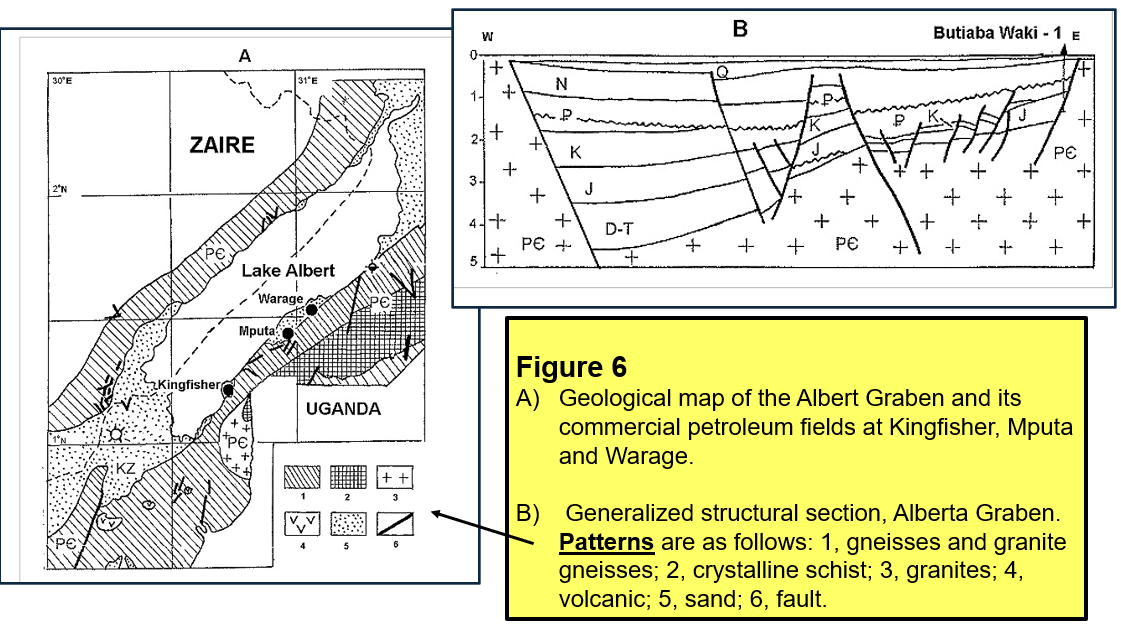
As of this writing, April, 2026, oil production in this part of Uganda is still “spinning up.” These deposits of petroleum are commercially important, again with about 1.5 billion barrels of oil estimated to be recoverable, of the over 6 billion gallons estimated underground in these deposits.
ANTARCTICA
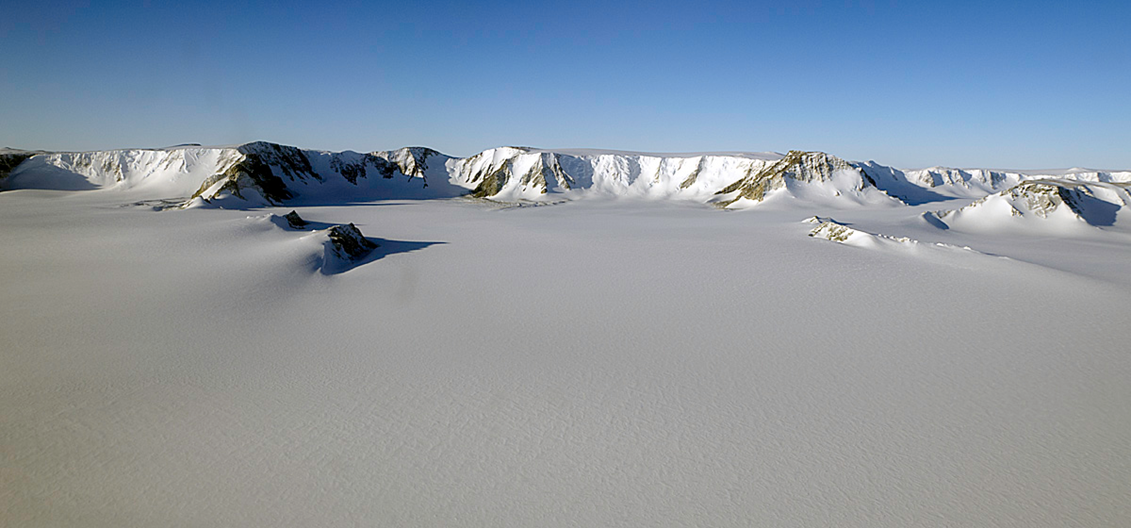
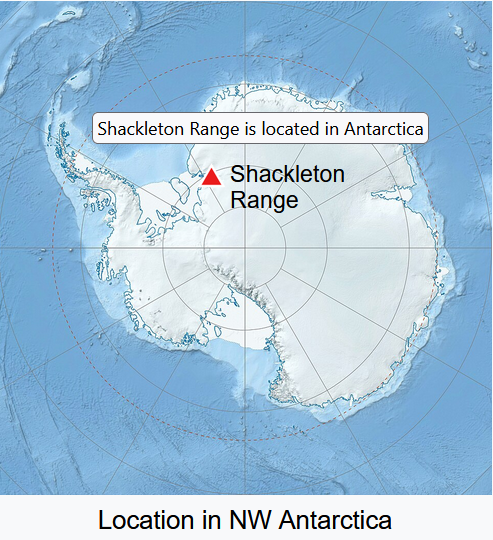
There are two locations in Antarctica where Abiotic petroleum has been found: Shackelton Ridge, and volcanics from Mt. Erebus:
The Shackleton Ridge of eastern Antarctica is rich in Precambrian supracrustal volcanogenic sedimentary rocks and their zonal metamorphic forms (kyanite-sillimanite facial series). Primary fluid inclusions of 13 garnet crystals samples from parametamorphites of the Shackleton Ridge comprise methane and heavy hydrocarbons.
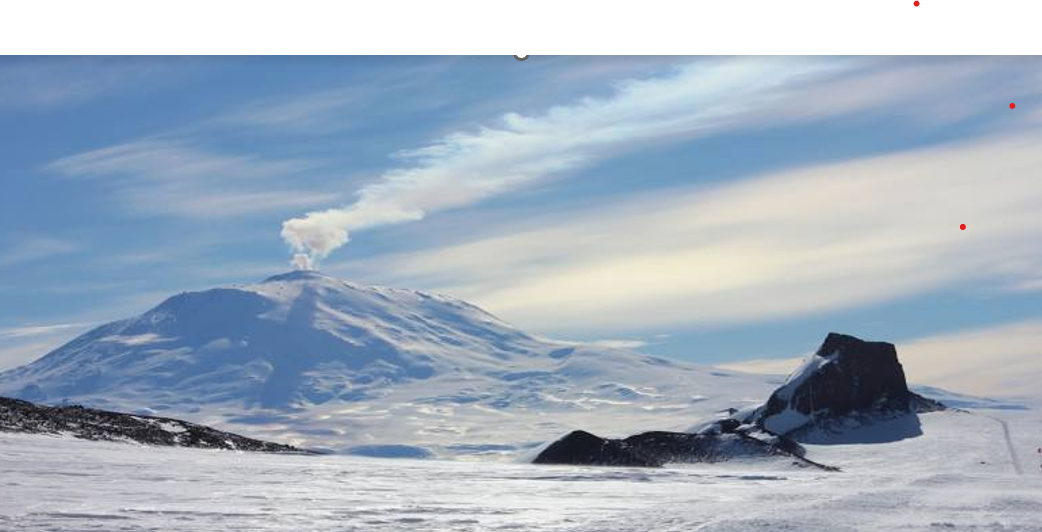
Mount Erebus: Mantle xenoliths found in the Quaternary lavas of Mount Erebus Volcano (Ross Island, East Antarctica) are dunites, garzburgites, and pyroxenites. Gas content of their primary fluid hydrocarbon fluid inclusions is 0.2–1.0 g/t.
EURASIA
In the western parts of Eurasia there are additional areas of ancient rocks of abyssal origin which contain hydrocarbons in the Baltic Shield and the Ukrainian Shields. These areas are displayed in Figure 8 below.
Baltic Shield: We examine next this example of hydrocarbons of abiotic origin in the Baltic Shield of Sweden and Norway. Although there are no sedimentary rocks in or around Norway’s Arendal area, the dolerite (crystallization temperature is more than 1000°C–1200°C) dykes intersecting the Archean gneisses have many interstices and amygdaloidal voids filled with liquid petroleum of n-C10–n-C22 alkanes with some admixture of isoprenoid hydrocarbons.
Evans et al. [1964] have concluded that this petroleum doubtlessly is of abiogenic origin.
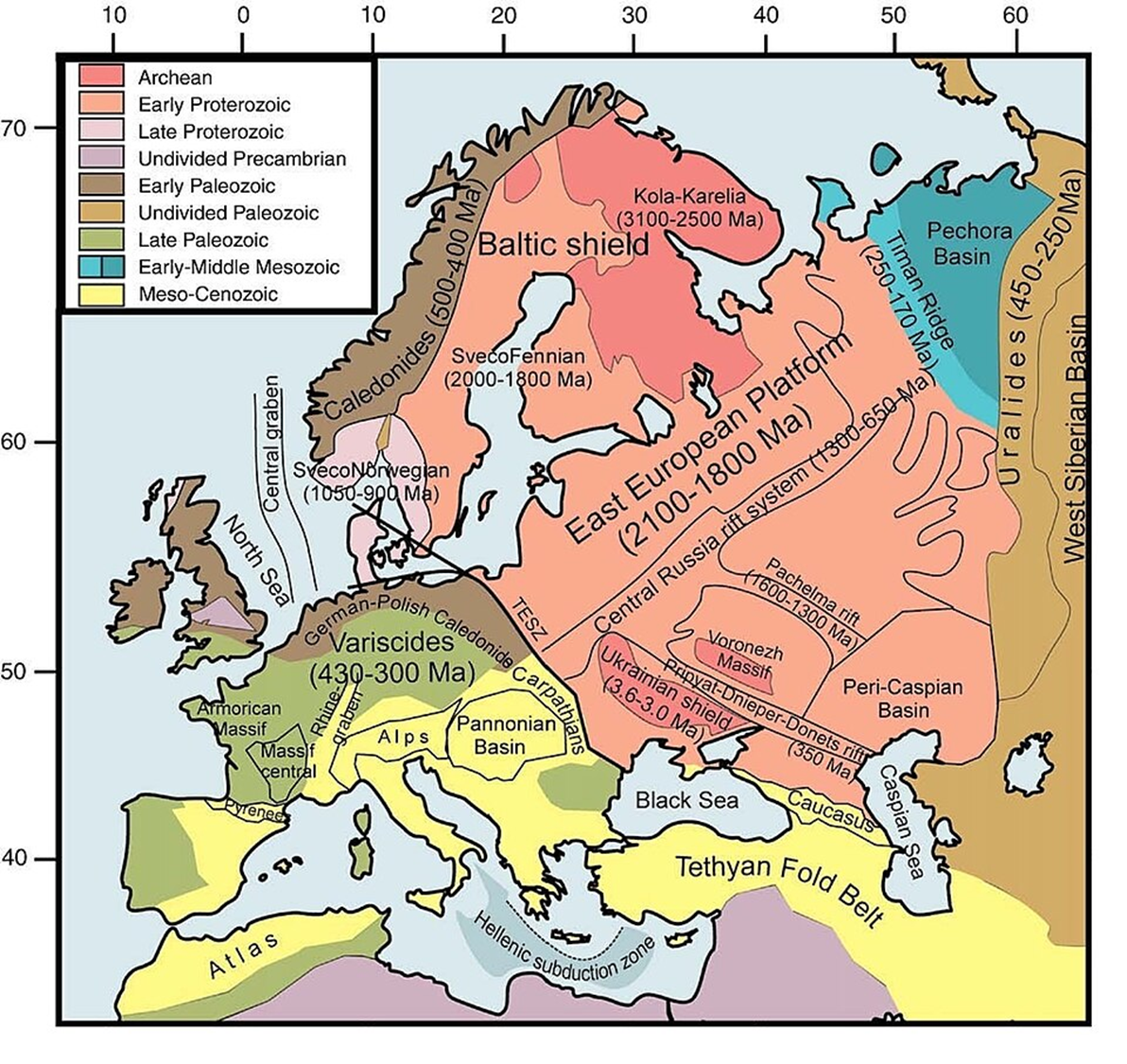
Ukrainian Shield: The Proterozoic crystalline complex of the Ukrainian Shield is distributed broadly and comprises amphibolites, gabbro, gabbro-norites, labradorites, norites, gneisses and graphitic gneisses, granites, diabases, carbonatites, calciphyres, crystalline schists, ferriferous quartzites, felsites, leptites, marbles, metasandstones, tuffs, and alkali ultrabasites. Both the Archean and the Proterozoic rocks here do have petroleum fluid indications over large areas. Liquid crude oil was observed in fissures and fractures of amphibolites and granite core samples recovered from several boreholes at the depth of 380–900 m in the northeast area of the Ukrainian shield. As indicated by gas chromatography of gas mixture samples from pulverized Precambrian rocks of the Ukrainian Shield, they contain 0.001–0.204 cm3/g of methane.
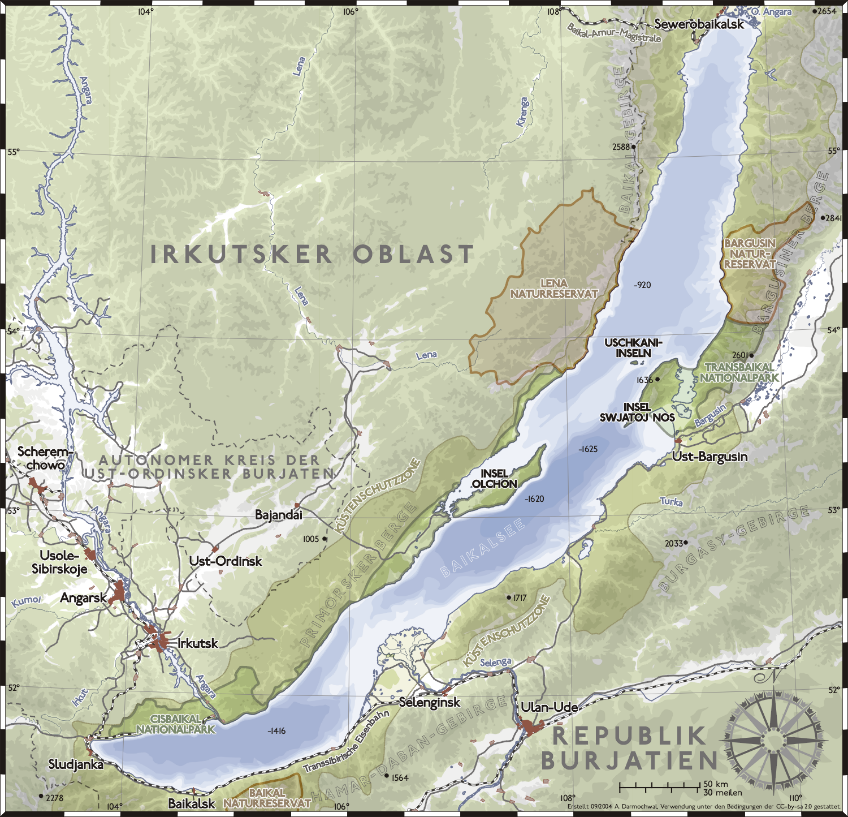
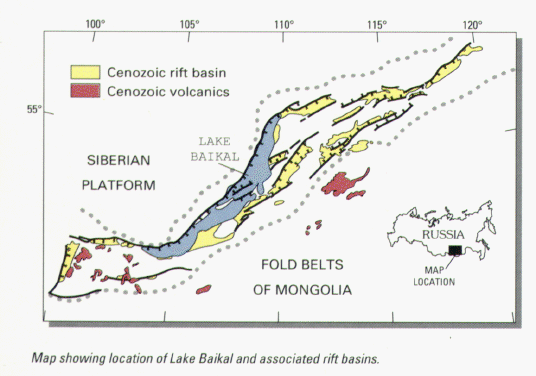
There is more, well to the east, near Russia’s Lake Baikal.
Lherzolites from the recent Baikal Rift Belt are rich in primary fluid inclusions. Methane concentrations of 3 g/kg were reported. C1-C6 alkanes with concentrations from 4.09 to 63.35 L/t were found in primary fluid inclusions of albite, apatite, nepheline, sphene (titanite), aegirine, and eudialite from the olivine-titanium-augite gabbro and urtites in east Siberia.
OTHER CONTINENTS, SHIELDS, AND EXAMPLES
That AGU article by Kutcherov and Krayushkin goes on to list other areas where hydrocarbons are found in igneous rocks and far from the usual expected association with the decomposition of sediments containing organic remains of plants in sedimentary basins. Those other areas include the Brazilian Shield of South America, in the Pamir mountains of central Asia, west of the Xinjiang Province of China, in the Precambrian igneous and crystalline metamorphic rocks of the Caapvaal Craton, South Africa, In western Greenland near Peninsula Nuussuaq, and in volcanic rocks in eastern Greenland.
In the Sino-Korean Region of Asia, in northern China, the Yanshan aulacogen <failed rift>is filled predominantly with the Middle and Later Proterozoic crystalline limestones, dolomites, and marbles. Their total thickness exceeds 9000 m, extending over 29,500 ft deep! The isotopic age of the carbonates varies from 800 to 1850 Ma. Here 65 native liquid oil and solid bitumen shows have been mapped in outcrops of Tilin and Vumishan crystalline carbonates.
THREE QUICK TAKE-AWAYS
(1) Petroleum shows/deposits have been found in pre-Cambrian crystalline shields all over the world,
(2) Presence of oil and gas deposits in the pre-Cambrian crystalline shields without sedimentary rocks cannot be explained from the traditional biotic petroleum-based origin point of view, and
(3) Petroliferous fluid from the mantle could be the only possible source of petroleum deposits in the pre-Cambrian crystalline shields.
CONCLUSIONS
Geological data presented here does not answer the main questions related to the hypothesis of biotic petroleum origin.
Only the theory of abyssal and abiogenic origin of petroleum gives a convincing explanation for all the above-cited data.
The experimental results discussed by Kutcherov and Krayushkin confirm that the CaCO3-FeO-H2O system spontaneously generates the suite of hydrocarbons characteristic of natural petroleum. I conclude that part of the hydrocarbon compounds found in abyssal zones could be generated in mantle conditions and migrate through deep faults into the Earth’s crust, where they form oil and gas deposits in any kind of rock and in any kind of structural position.
Both the numerous exposures cited above, and the experimental results presented by Kutcherov and Krayushkin, place the theory of the abyssal abiogenic origin of petroleum in the mainstream of modern physics and chemistry and open a great practical application for hydrocarbon exploitation.
The theory of the abyssal abiogenic origin of petroleum confirms the presence of enormous, inexhaustible resources of hydrocarbons in our planet and allows us to develop a new approach to methods for petroleum exploration and to reexamine the structure, size, and location of the world’s hydrocarbons reserves.