Abiotic Oil?

Robert W. Endlich
INTRODUCTION

Abiotic Oil? Deposits of oil WITHOUT the changes in decayed biologic materials such as plants, algae and plankton, buried in sedimentary basins, and then compressed, heated, and transformed into hydrocarbon deposits to be used by man, eons later. Is that possible? We explore this topic. But it is not without controversy!

Courtesy of Pixabay

In recent decades, published results indicate that abiotic, sometimes called “abiogenic,” oil might be the origin for some of the hydrocarbon deposits of fuels. What follows is an introduction to this very possibility, and as we will soon see, probability, based on observations made on the various continents and published by Nature, The American Geophysical Union, Harvard, and Researchgate.net.

My undergraduate work was as a Geology Major at Rutgers, graduating in 1962; in those years draft into military service was obligatory for young men, and the Air Force soon sent me to Texas A&M for a year to qualify as a Weather Officer, and so I went on to a career in another Earth Science, Meteorology. But I still have a fondness for geological topics.

The earliest mention of an abiotic source for hydrocarbon fuels I found in my research for this post was a small 17 Nov 1991 News Note by Peter Continue reading “Abiotic Oil?”

Some Comments on Drought in the Southwest U.S.

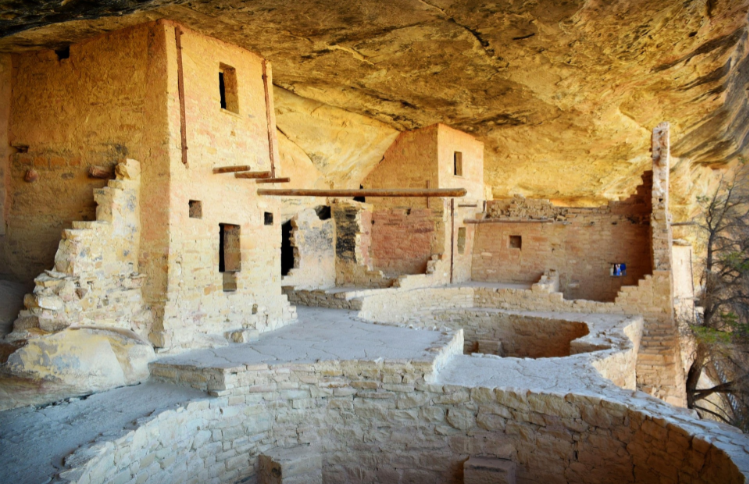
As Revealed through Pueblo Indian Architecture, History, and Tree Ring Lab Time Series.

Robert W Endlich
INTRODUCTION
Courtesy of Pixabay

During the presentation at the 21 March 2026 CASF meeting, Bill Gutman highlighted brief segments from the Joe Rogan Experience video which featured comments by Dr. Will Happer, emeritus Professor of Physics from Princeton, and Dr. Richard Lindzen emeritus Professor of Earth Atmospheric and Planetary Sciences from the Massachusetts Institute of Technology, https://open.spotify.com/episode/3ihn2aHDz9dyZU0T3Kylk3

The presentation featured several minute-long video segments, following which Bill Gutman paused the video, and asked topical questions to evoke discussion of the content by meeting attendees.

This post pertains to a couple of these segments, specifically the generally Continue reading “Some Comments on Drought in the Southwest U.S.”

Comments on the History and Current State of World Energy

Robert W. Endlich

 [Preface: This post’s topics (Coal, Oil, Gas, Fracking, Nuclear, “End of Oil” Energy Stories, unusual hydrocarbon deposits, and some estimates of Petroleum Reserves) are broad reaching; it is difficult to encapsulate all such subjects in an internet post of this type. This is my ‘best effort,’ within these obvious constraints.]

INTRODUCTION

This post provides comments on the history and current state of world energy and concerns stated by climate alarmists regarding global warming.

Courtesy of Pixabay.

The climate alarmists’ concerns about our use of fossil fuels as the source of “human-caused, CO2-fueled, global warming” begin with the Industrial Revolution, in the 19th Century. when coal use became widespread. Our ’Friends’ at the National Resources Defense Council, the NRDC, in their article’s lead paragraph, Global Warming 101, come right out and say it:

“Since the Industrial Revolution, the global annual temperature has increased in total by a little more than 1 degree Celsius, or about 2 degrees Fahrenheit.”

This NRDC statement is written as if temperature never changed before the Industrial Revolution. In this Continue reading “Comments on the History and Current State of World Energy”

What has happened to the National Academy of Sciences  – Part Two

Robert W. Endlich
INTRODUCTION
Check the Data. (Image by Pixabay)

In Part One, I described when, over a fifteen or so year period of my work assignments, I needed current knowledge of the toxicity of chemicals used in military applications. From 1976-1979, the chemicals were Unsymmetrical Dimethyl Hydrazine, and Nitrogen Tetroxide, propellants for the Air Force Titan 2 Missile. Then, 1984-1994, the chemicals were Fluorine, Nitrogen Trifluoride, and Hydrogen Fluoride (HF) [actually its deuterated fluoride isotope cousin (DF)] for the Navy’s MIRACL laser at White Sands Missile Range (WSMR).  In those days my colleagues and I respected and trusted the National Academy of Sciences Committee on Toxicology, and by inference the National Academy itself.  For me, that period in my work history ended in 1994.

DOUBTING ALLEGED CO2 CLIMATE EFFECT

My beginning of doubt into significant “human-caused, CO2-Fueled Global Warming” arose after James Hansen’s 23 Jun 1988 testimony to the Senate, Continue reading “What has happened to the National Academy of Sciences  – Part Two”

What has happened to the National Academy of Sciences – Part One

Robert W. Endlich

Part One: Operational Experience . . . When We Used NAS’s Data

INTRODUCTION

My work experience serves as a useful prelude to writing this post. I was a Weather Officer in the Air Force for 21 years, and soon after retiring from the Air Force, I became a Meteorologist working for the Army Atmospheric Sciences Laboratory, ASL, where my previous Air Force experience helped the mission at White Sands Missile Range, New Mexico.

Image Provided by Pixabay

One of my Air Force assignments was commander of the Weather Detachment at Davis-Monthan AFB, AZ, sometimes simply DM, on the southeast side of Tucson. I was assigned to Davis-Monthan from Sep 1976-Jul 1979, at the height of the Cold War. Though DM was a Tactical Air Command, TAC, Base, a major “tenant” organization there was a Strategic Air Command (SAC) unit, the 390th Strategic Missile Wing, equipped with 18 Titan 2 Inter-Continental Ballistic Continue reading “What has happened to the National Academy of Sciences – Part One”